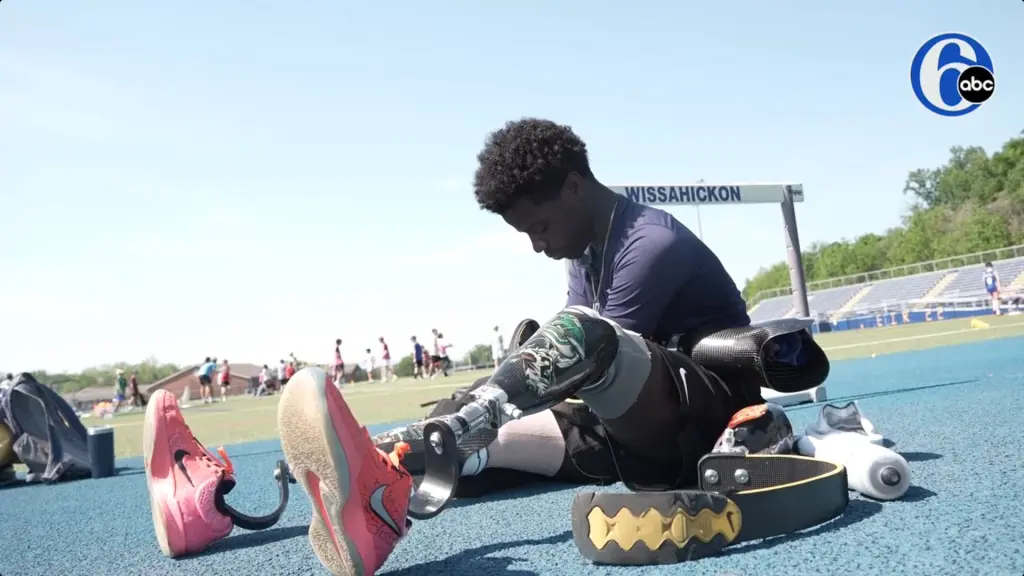
A 16-year-old student-athlete from Pennsylvania is inspiring many with his determination to compete at the highest level of para-sport after overcoming a life-threatening illness that resulted in the loss of all four limbs. Chase Mayweather, a sophomore at Wissahickon High School in Ambler, is working toward his goal of representing the United States in track and field at the 2028 Paralympic Games in Los Angeles.
Mayweather was just three years old when he went into septic shock while visiting an amusement park with his family. Initially believed to have the flu, his condition rapidly deteriorated, causing multiple organ failure. Doctors told his parents that amputating both of his legs and most of both of his arms was the only way to save his life.
Despite the life-changing surgery, Mayweather remained determined to lead an active life. Over the years, he has participated in several sports, including baseball, soccer and football. However, it was track and field that became his greatest passion. Using carbon-fibre running blades, he has steadily improved his performances and established himself as a competitive athlete at the high school level.
The 16-year-old says this has been his most successful season so far. During the current track season, he earned a placing in one of his school’s dual meets, qualified for district competition and advanced to the state championships, achievements he described as significant milestones in his athletic journey.
Mayweather has set his sights on competing in track at the 2028 Paralympic Games, where he hopes to win a gold medal. Athletes who are quadruple amputees remain relatively uncommon in Paralympic competition, making his ambition particularly notable.
His journey has already attracted attention for demonstrating how adaptive sports and modern prosthetic technology can enable athletes with severe physical disabilities to compete at increasingly high levels. Running blades, which are specially designed prosthetic limbs made from lightweight carbon fibre, help athletes generate forward motion and participate in sprinting events.
Alongside pursuing his athletic goals, Mayweather has also used his story to encourage others facing challenges. He believes perseverance is essential to achieving long-term goals, regardless of the obstacles people encounter.
“If you keep going and never stop trying, you will always chase that dream and will eventually get it,” Mayweather said in a recent interview. “You just gotta run your race. I gotta run mine.”
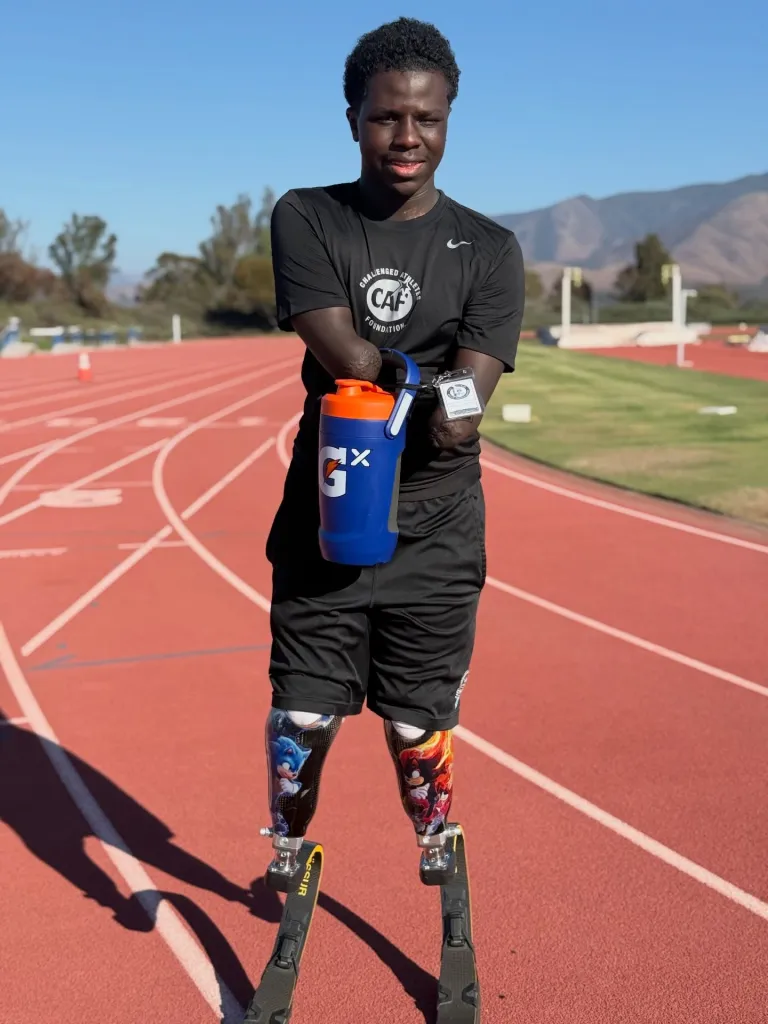
With two years remaining before the Los Angeles Paralympics, Mayweather continues to train while balancing school and athletics. His progress through local, district and state competitions represents important steps toward qualifying for future elite para-athletics events.
Although the road to the Paralympics is highly competitive, Mayweather’s achievements so far highlight the opportunities available through adaptive sports and the determination required to compete at the highest level. His journey from surviving septic shock as a toddler to pursuing a place on the Paralympic stage reflects years of rehabilitation, training and commitment to his sporting ambitions.