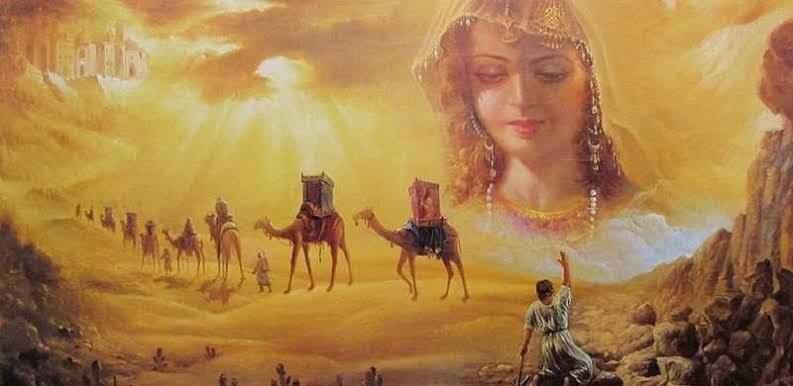
In relation to the romantic tragedies found in Punjabi folklore, there is one that stands out for its longevity. Unlike other tales that change with trends, the story of Sassi Pannu has been passed down through many generations in the form of songs, poems, and even conversation. This is not necessarily because of an official written version of the tale; rather, the story’s endurance shows its value in the way that it provides insight into devotion, social standing, and defiance against one’s situation.
The story revolves around two people, Sassi, a woman of Bhambhor, and Punnu, a prince of Kech of Balochistan. Their love not only defies physical barriers but also breaks through the barriers created by society. They are forced to elope as their family objects to their relationship, and they get drugged and taken away in the desert. Sassi wakes up to find that he has gone and follows him into the desert, where she meets her end. This is a simple plot, but it carries great significance.
The distinction between a sentimental love story and Sassi Pannu lies in the manner in which desire has been pitted against the constraints of society in this narrative. The barriers that the lovers have to overcome are not mere happenstance, but are a result of kinship order and loyalty to region – all of which occur outside of the sphere of personal desires. Such a reading of the story reveals it as a subtle piece of social criticism, indicating that personal desires do not exist independently of the systems of control surrounding them.
The way the tale is handled by the Sufis in poetry especially through the voices of Shah Hussain and Bulleh Shah is another perspective that deserves consideration. Through their interpretation, the agony of Sassi is a symbol of longing for God and her death is a sign of her reaching there, spiritually and not in defeat. The way the story is interpreted both literally and mystically contributes significantly to its sustainability. It appeals to lovers as well as those who pursue other aspects of life.
What is most remarkable about the story, however, is its unwillingness to provide any kind of comfort. The girl does not make it to Punnu, and her death is not reversed through poetic justice or supernatural forces. This unsatisfying conclusion resists any urge to impose some sort of neat moral lesson and perhaps makes for the best part of the legend. Rather than teach the audience what an ending of a love story should look like, the legend of Sassi Pannu just states that, if true love challenges the established order of society, then it usually has a tragic ending.