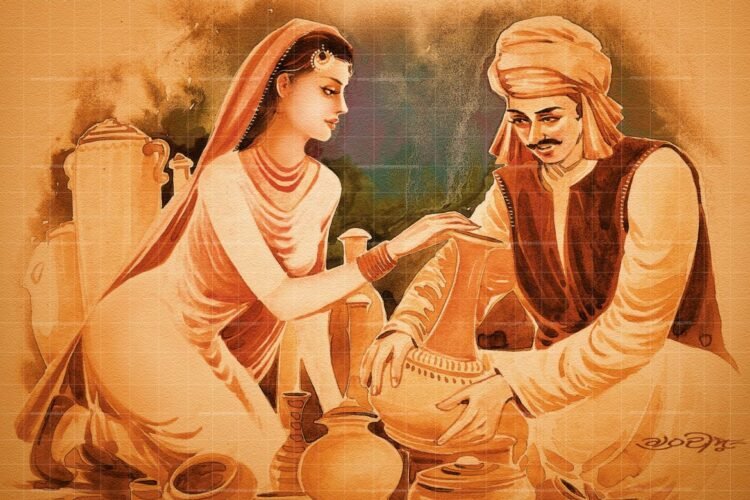
Of all the tragedies of romantic love that are part of the Punjabi and Sindhi oral tradition, the tale of Sohni Mahiwal stands out due to the very physicality of its central metaphor, a woman swimming a river every night on only a pot made of clay in order to meet her beloved. It is because of the power and richness of meaning encapsulated within this single action that the tale has lasted. The tale is not just one of frustrated love; it is of the body put in constant peril of a river’s current.
Sohni, the daughter of a potter from Gujrat, and Izzat Baig, a businessman from Bukhara who arrives in the vicinity and decides to take up buffalo herding with the alias Mahiwal, form the crux of the story. They grow closer despite the disapproval of her family, and she is made to marry another man in order to break their relationship. Unfazed, she makes a daily trip across the Chenab River at night, floating by means of an earthen pot, and meets Mahiwal on the other side. Her cousin finds out about this and gives her an unfired pot instead, which sinks in the river.
However, what makes this story different from other regional love stories is its unwillingness to pin down the tragedy to the mere presence of prohibition from the outside world. Family resistance starts off the story, indeed, but the way Sohni loses her life is due to domestic treachery, something done by someone close to her and not by destiny or the forces afar. This changes the tone of the story. The story does not deal with social hierarchy per se, but rather with the constraints put into place by those close.
The river itself merits mention as more than just a setting. In the narrative tradition, water represents the limit beyond which the proper and the improper desires lie, and Sohi’s nightly crossing symbolizes the physical performance of this limit. It is not accidental that Sohi drowns, because it becomes the conclusion of a story constructed since the beginning about the lack of proper land for illicit desires.
When read in conjunction with similar myths like Sassi Pannu, Sohni Mahiwal reveals another common trend within this genre of literature, and that is that love which continues beyond what is socially acceptable usually ends not in solution but in destruction, sometimes very literal destruction. However, this tale cannot be simply categorized into a lesson of morals. The actions of Sohni each night are not condemned as foolish or glorified as heroic; they simply have to be done.